
Hair transplant
A hair transplant planned and performed in Turkey by Dr Emre Erol himself — one or two patients a day, Sapphire FUE, FUE or DHI chosen after he has seen your donor area, and follow-up that continues long after you fly home.
At a glance
- In theatre
- 6–8 hours, one day
- Anaesthetic
- Local, with sedation
- Back to work
- 3 to 5 days
- Final density
- 12 months

A hair transplant moves follicles from an area where hair grows permanently to one where it has thinned. That much is true of every clinic in Istanbul. What differs is who plans it, how long they spend with you, and whether the plan accounts for the next twenty years rather than the next twelve months.
One surgeon, one or two patients a day
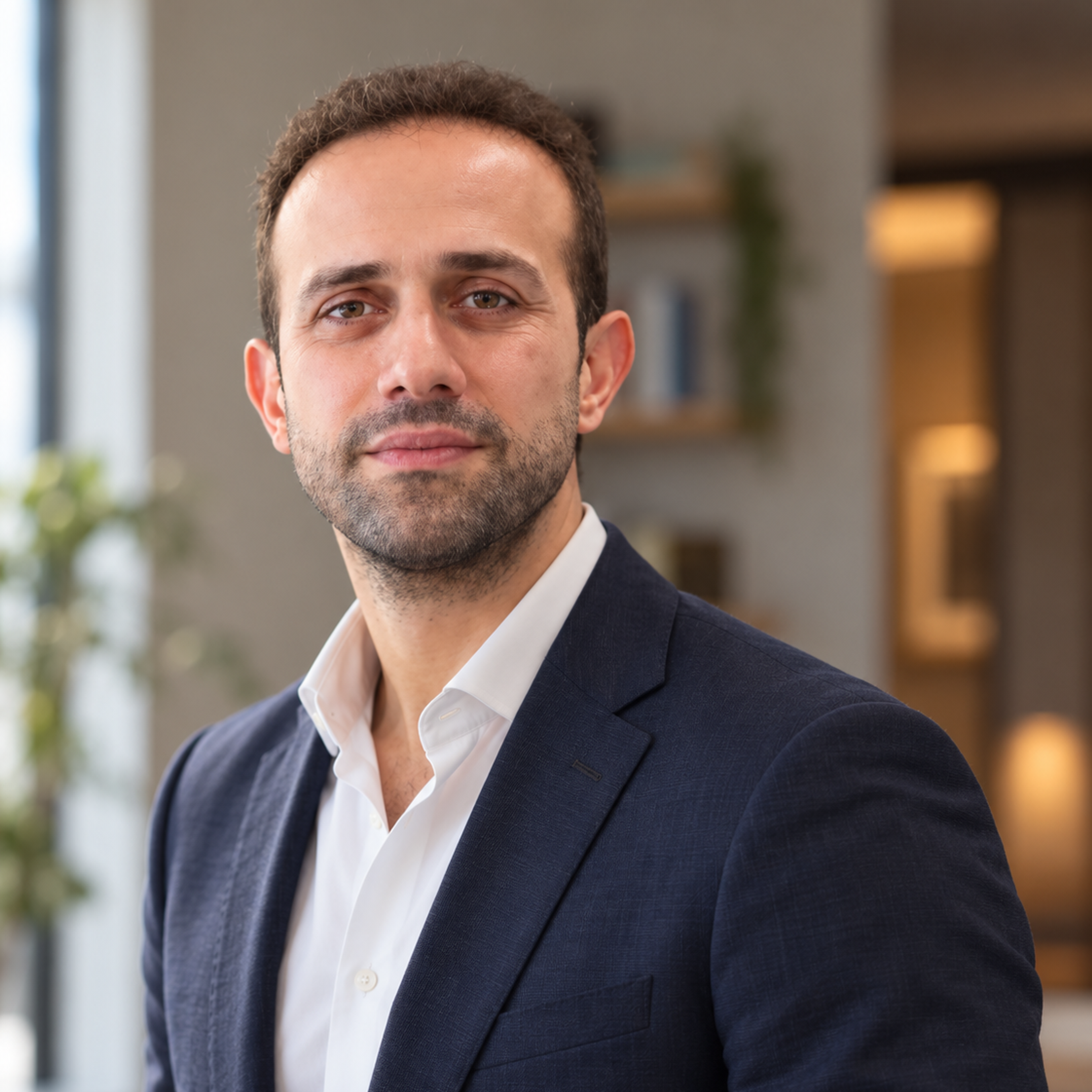
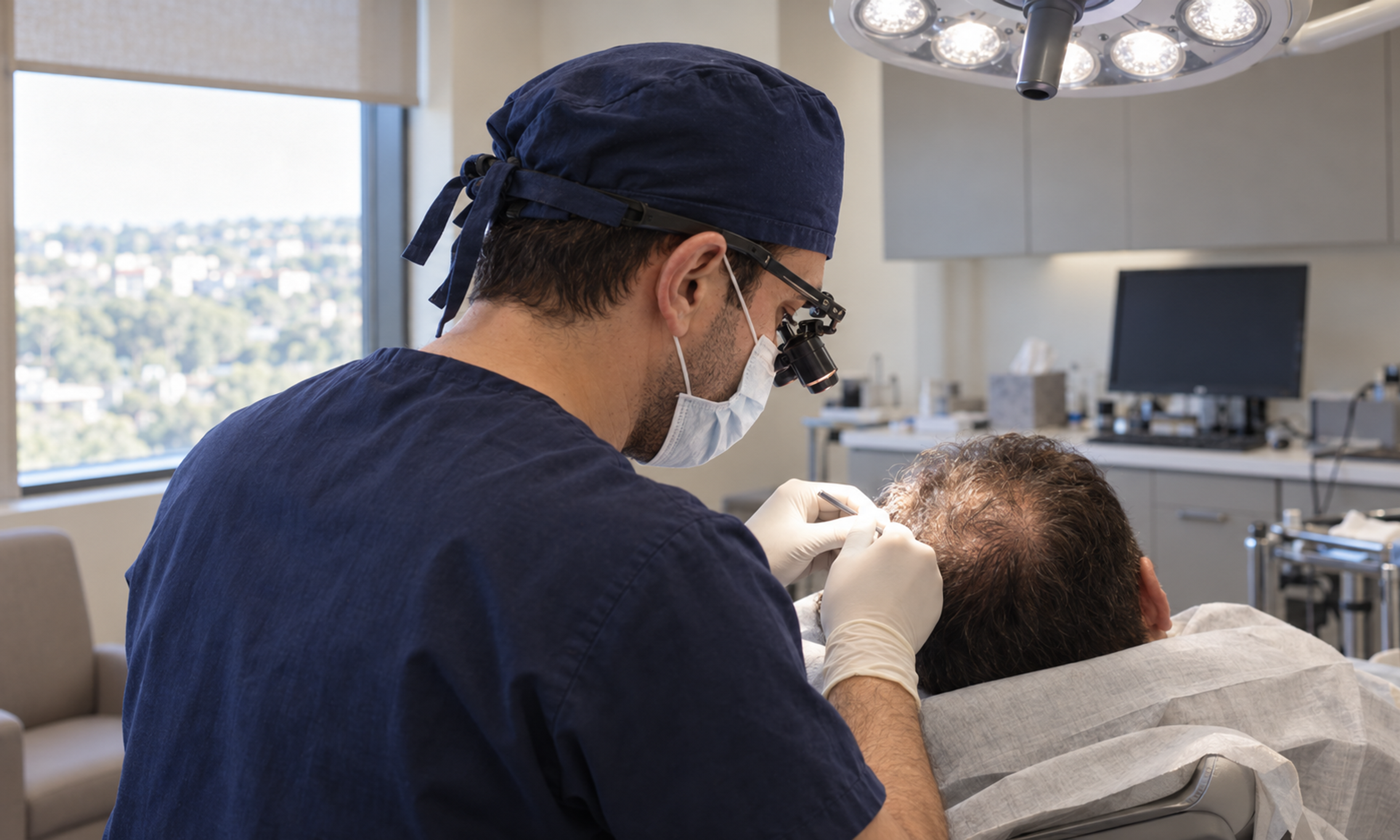
Dr Erol performs one, at most two procedures a day. He assesses you himself, designs the hairline himself, and is present for the operation rather than reviewing it afterwards. Where a clinic runs six or eight cases in parallel, the surgeon's name is on the plan and a technician's hands are on the work; here they are the same person.
Your donor area is finite
The number of grafts your donor area can give over a lifetime is fixed, and spending them badly in one session cannot be undone. A first transplant is therefore planned with the second one in mind — including, if it is on the table, a beard or eyebrow transplant, which draws on the same supply.
Most donor areas hold somewhere between 5,000 and 7,000 grafts that can be moved over a lifetime, and that figure is set by your own density and laxity rather than by what you are willing to pay for. A clinic quoting 6,000 grafts in one sitting is not offering you more hair; it is spending the rest of your supply early, on a pattern of loss that has not finished moving.
Sapphire FUE, FUE and DHI
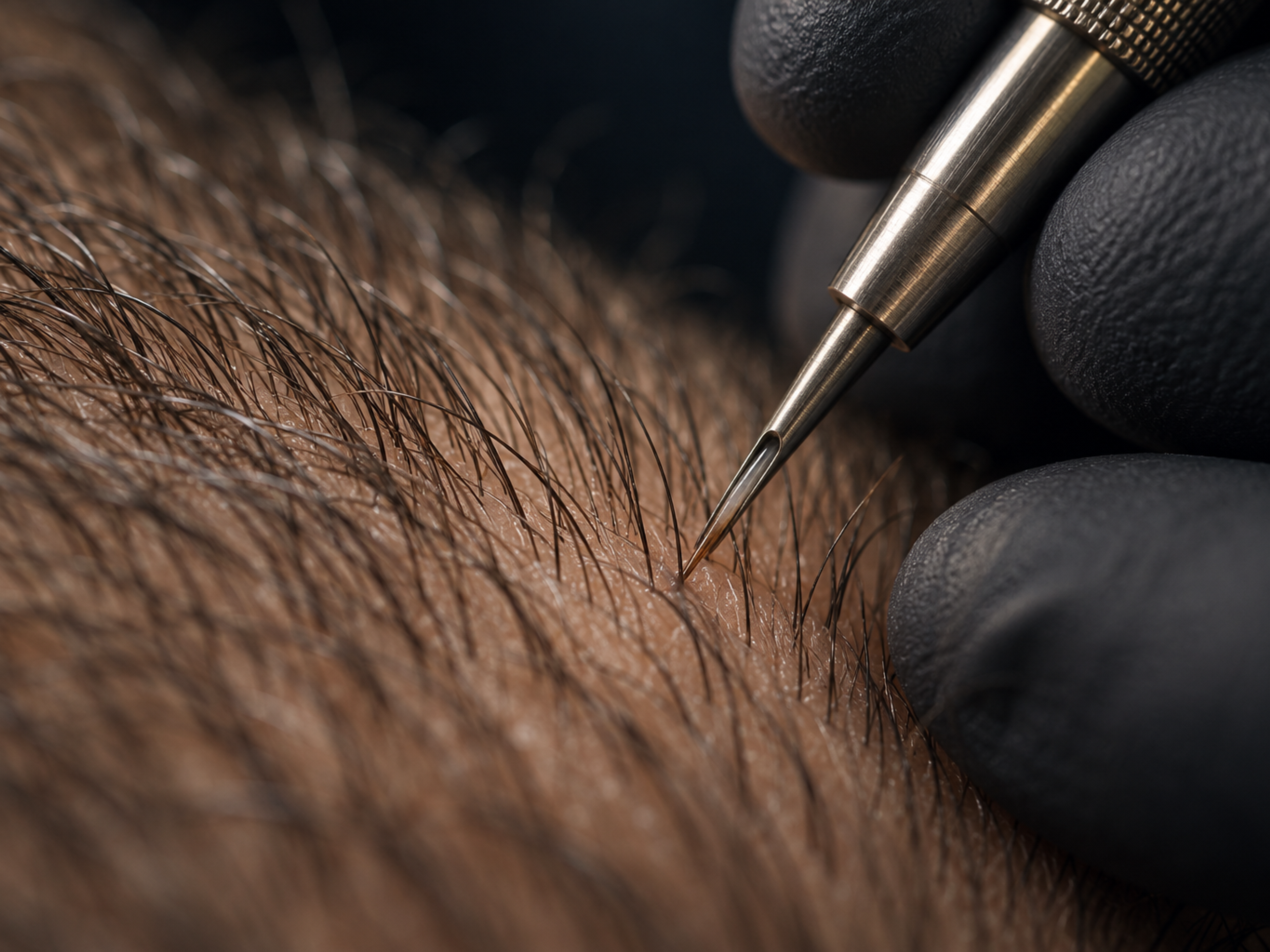
The technique is chosen after the assessment, not before it. Sapphire FUE, FUE and DHI are instruments, each better suited to a particular donor density and pattern of loss — a sapphire blade for a dense hairline, a punch where scarring must be avoided, an implanter pen for adding density between hairs that are still there. A clinic that advertises one of them as a product is selling the tool rather than the result.
What the day itself is like
It is a day case under local anaesthetic, usually six to eight hours with breaks, and you are awake throughout. The donor area is trimmed, the anaesthetic goes in, and the extraction takes the longest single stretch. You can eat, talk and use your phone. Most patients describe the anaesthetic injections as the only genuinely uncomfortable part, and the rest as tedious rather than painful.
Travelling to Turkey for surgery
Most patients fly in for this, so the consultation begins long before you arrive and the follow-up continues long after you leave. You are assessed remotely in detail, given one written figure that does not change on the day, and reached directly rather than through a coordinator once you are home.
Plan on three days in Istanbul and two or three hotel nights. That covers the procedure, the first hair-wash the following day, and a post-operative check before you fly — two in-clinic visits in total. Mild forehead swelling can appear on day three or four and settles within the week.
Grafts are secure once scabbing has formed its natural adhesive at around seventy-two hours, so a short flight home can often be cleared from day three. Waiting until day seven is better where your schedule allows it. The surgery is under local anaesthetic, so clot risk is low, but on a longer flight drink water, walk periodically, and keep the recipient area off the headrest.
Checking any clinic in Turkey, including this one
Turkey rewrote its medical tourism rules on 26 April 2025. A facility treating international patients must now hold an international health tourism authorisation certificate, be registered on the Ministry of Health's HealthTürkiye portal, and carry complication insurance covering what it performs. Clinics are required to publish their certification, so you can check ours and you should check anyone else's before paying a deposit.
What the rules do not settle is who actually performs the operation. Turkey has clinics where a surgeon designs the hairline and technicians carry out the extraction and implantation with little supervision. Ask by name which doctor is responsible for your case and which parts they do themselves, and ask for their Turkish Medical Association registration. If an agency is arranging the trip rather than the clinic, get it in writing who carries clinical responsibility when something needs correcting.
Most nationalities enter Turkey visa-free or on an e-Visa for a stay this short, with a passport valid for at least six months. Confirm the rule for your own passport before booking.
What growth actually looks like
Growth is slow and uneven by nature. The transplanted hairs shed at around week three, nothing appears to happen for a further two months, and the density arrives in patches well into the first year. Where the follicles around the grafts are themselves weakening, PRP or exosome therapy may be worth adding to protect them — and Dr Erol will tell you when they are not.
Photographs taken before month twelve are not the result. Calibre and texture continue to mature through the first year, and a transplant judged at month six is being judged at roughly half of what it will become.
When the answer is no
Active scalp disease, a pattern of loss still moving quickly in a man in his early twenties, unmanaged diabetes, and expectations a donor area cannot meet are all reasons to wait or to decline. Loss that is still advancing is the most common one: transplanting into a front that will keep receding produces an island of hair and a second operation you did not budget for. Medical treatment first, surgery when the picture is stable.
Interested in Hair transplant?
Tell us your goals and we will map out your options.
Chosen for your donor area and your pattern of loss, after the assessment — never offered as a product beforehand.
Sapphire FUE
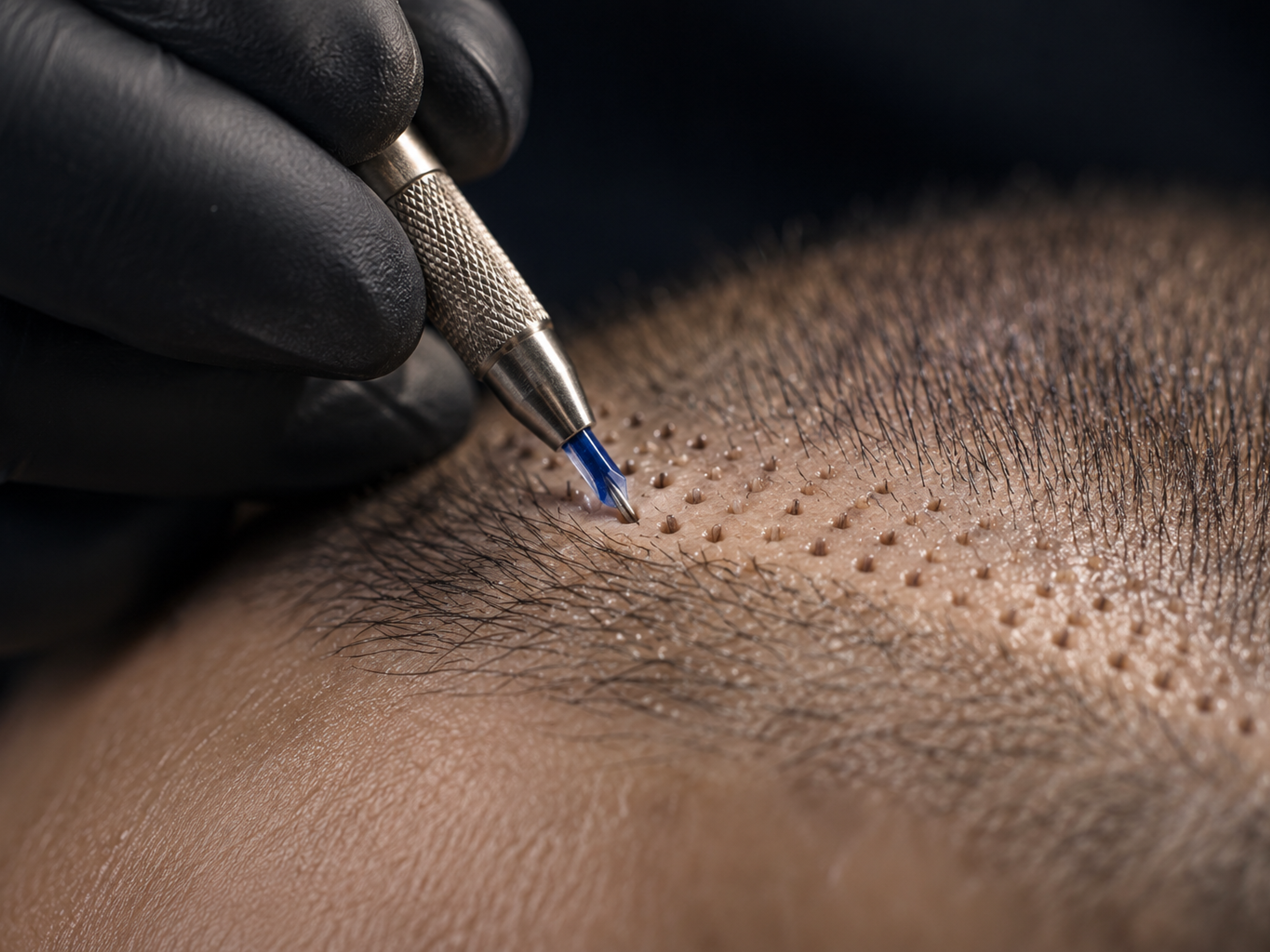
Follicles are opened with a sapphire-tipped blade rather than steel. The channels are finer and close faster, which matters most across a dense hairline where the angle of every graft is visible.
FUE
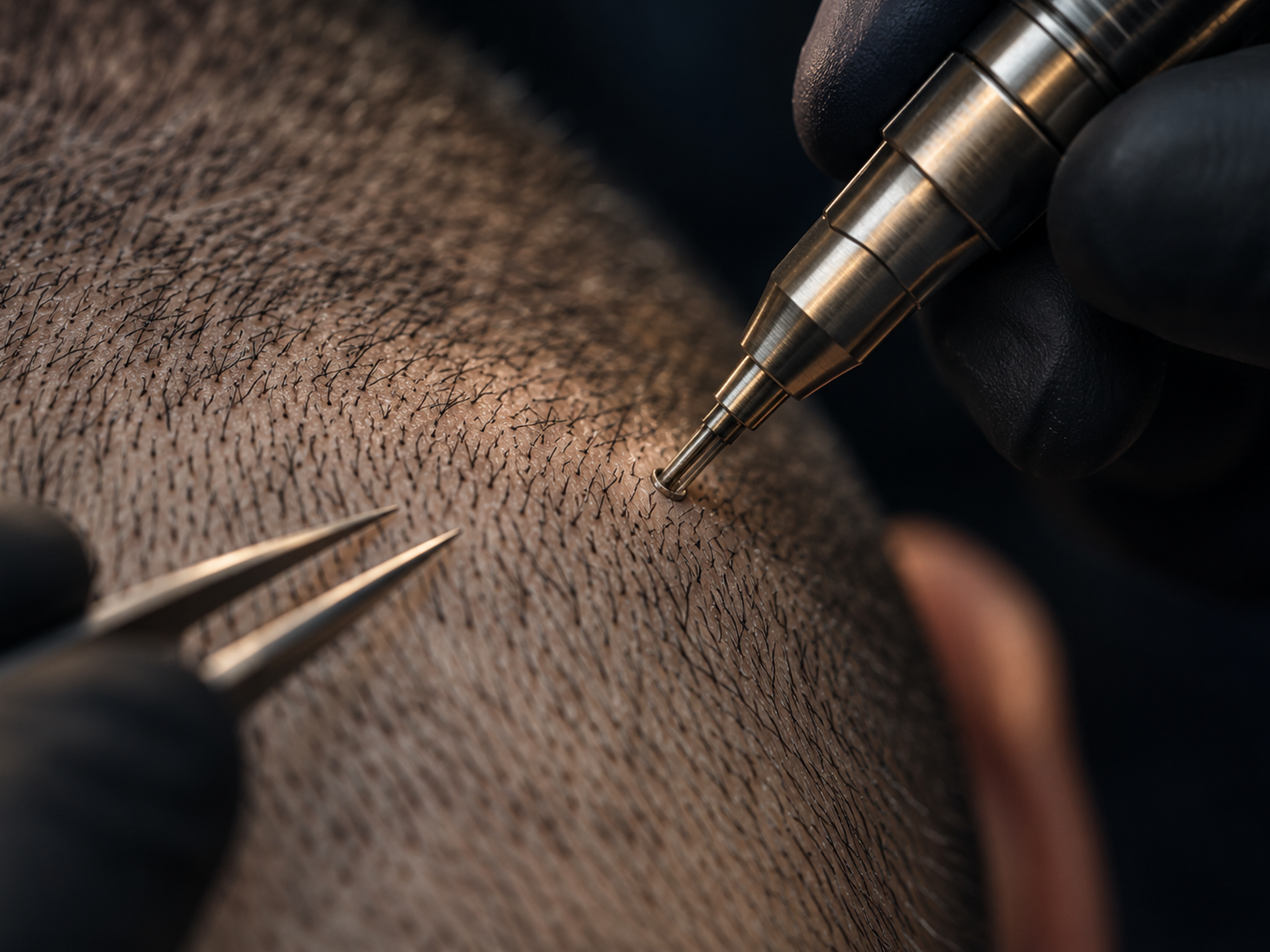
Grafts are taken one at a time from the donor area, leaving no linear scar. The standard approach for most patterns, and the one that preserves the most options later.
DHI
Each follicle is placed directly through an implanter pen, without opening a channel first. Useful for adding density between existing hairs, where a blade would risk what is already growing.
Growth is slow and uneven. This is the ordinary course, not the fastest one.
- Day 0
A full day in theatre. You leave with the donor area dressed and the recipient area visibly crusted.
- Day 10
The crusts have gone and the grafts are secure. Most patients no longer look obviously post-operative.
- Week 3–6
The transplanted hairs shed. The follicle stays and the shaft is replaced — this is the stage people mistake for failure.
- Month 6
Around half the density has arrived, coming in unevenly across the recipient area.
- Month 12
The result as it will stay, with calibre and texture matured. Photographs taken before this are not the result.
See it in his own words.
A short film from the clinic’s own channel — the procedure explained plainly, by the surgeon who performs it.
Questions
How many grafts will I need?
That is decided by your donor density and your pattern of loss, not by a package. Most donor areas hold 5,000–7,000 grafts over a lifetime. A clinic quoting 6,000 in one sitting is spending the rest of your supply early, on a pattern that has not finished moving.
How long do I need to be in Turkey?
Three days in Istanbul and two or three hotel nights — the procedure, the first hair-wash the next day, and a post-operative check before you fly. Two in-clinic visits in total.
When can I fly home?
Grafts are secure once scabbing forms its natural adhesive at around 72 hours, so a short flight can often be cleared from day three. Day seven is better where your schedule allows. On longer flights drink water, walk periodically and keep the recipient area off the headrest.
Will Dr Erol perform the operation himself?
Yes. He assesses you, designs the hairline and is present for the operation. Turkey has clinics where a surgeon plans and technicians execute with little supervision; ask any clinic by name which doctor is responsible and which parts they perform themselves.
Does it hurt?
It is a day case under local anaesthetic and you are awake throughout. Most patients describe the anaesthetic injections as the only genuinely uncomfortable part and the six to eight hours that follow as tedious rather than painful.
When will I see the result?
The transplanted hairs shed at around week three, little appears to happen for two months, and density arrives in patches through the first year. A transplant judged at month six is being judged at roughly half of what it will become.
How do I check a clinic in Turkey?
Since 26 April 2025 any facility treating international patients must hold an international health tourism authorisation certificate, be registered on the Ministry of Health's HealthTürkiye portal and carry complication insurance. Clinics must publish their certification — check ours, and check anyone else's before paying a deposit.
Is there anyone you turn away?
Yes. Active scalp disease, loss still moving quickly in a man in his early twenties, unmanaged diabetes, and expectations a donor area cannot meet. Transplanting into a front that will keep receding produces an island of hair and a second operation you did not budget for.
Sources
- 01Follicular unit extraction: a review of the technique and its outcomes — Dermatologic Surgery, 2021
- 02Androgenetic alopecia: pathogenesis and management — British Journal of Dermatology, 2022
- 03Donor area management in follicular unit excision — Journal of Cutaneous and Aesthetic Surgery, 2020