

Hair stem cell treatment
Regenerative cells drawn from your own body in Turkey, used to support follicles still capable of growing — the least proven of the non-surgical options, and the most expensive.
At a glance
- Per session
- About 60 minutes
- Source
- Your own tissue
- Downtime
- None
- Course
- Repeat sessions

Cells are taken from your own tissue, concentrated, and returned to the scalp to support the follicles already there. Because the material is yours, the question is not tolerance but whether there is anything left to support.
What is actually being used
The phrase covers several different things, and the differences matter. Most commonly it is a concentrate prepared from your own fat or blood, rich in the growth factors and regenerative cells that tissue contains. It is not a cultured stem cell line, and anyone offering you one for hair loss in a day-case setting is describing something that is neither licensed nor established.
Ask precisely what is being prepared, from which tissue, and what the preparation involves. A clinic that answers that question plainly is one worth listening to.
What the evidence supports
Less than the name suggests. There is reasonable early work on regenerative preparations improving density in miniaturising hair, and very little that would justify presenting this as a replacement for surgery. It belongs in the same category as PRP and exosome therapy: supportive, worth considering where follicles are weakening, dishonest if sold as regrowth.
Where it helps, and where it does not
It helps where follicles are alive and shortening. It does nothing where they are gone. An area bare for years has no target, and the honest options there are a hair transplant or accepting the loss — which is a reasonable choice, and one we will support.
The procedure
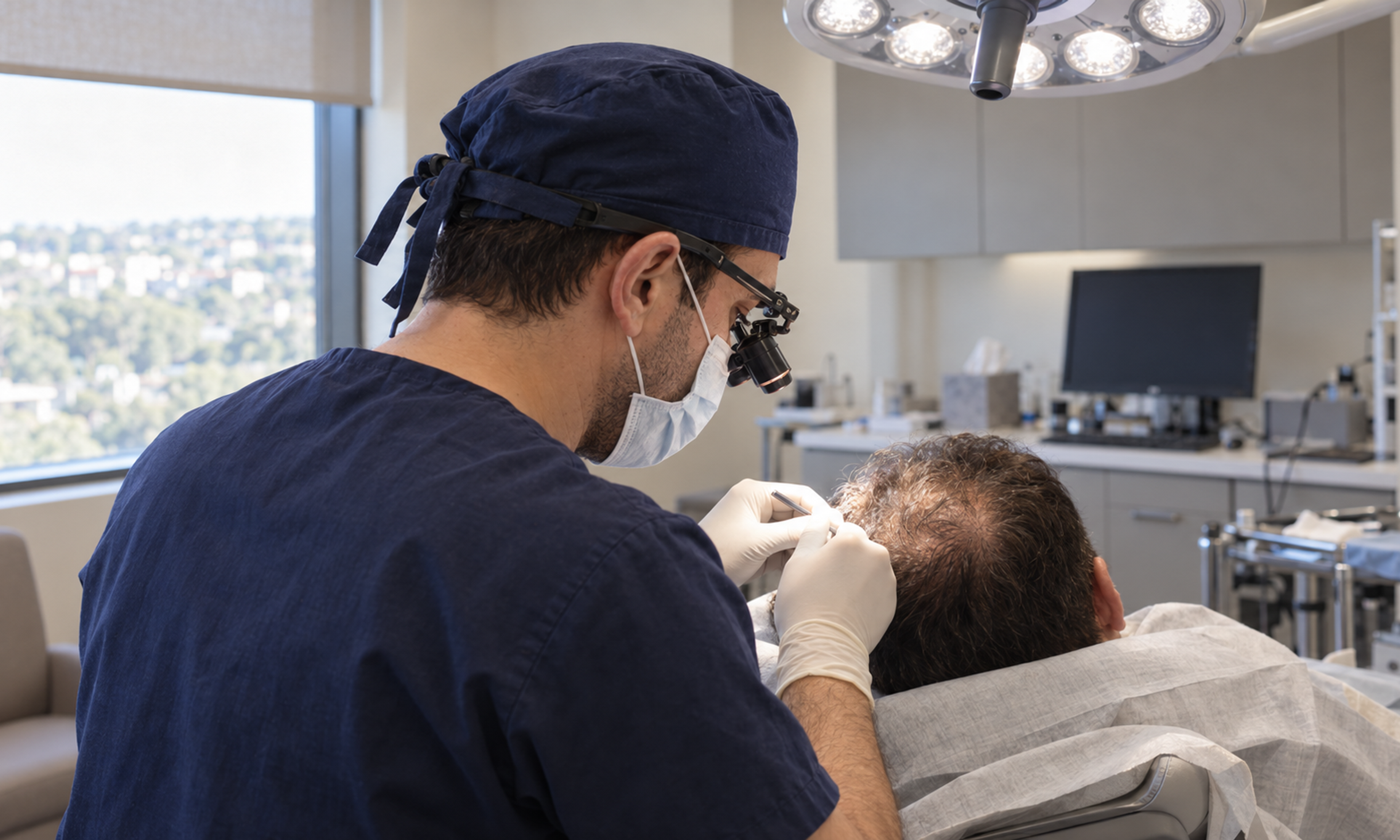
Where fat is the source, a small volume is taken under local anaesthetic, usually from the abdomen or flank, processed, and returned to the scalp in the same appointment. Expect two to three hours in total and a small bruise at the harvest site that settles within a fortnight. Where blood is the source, it is closer to a PRP session in length and comfort.
Cost, honestly
It is the most expensive of the non-surgical options and the least proven of them. If budget is a constraint — and for most people it is — the sequence that makes sense is a medical plan first, then surgery where the loss justifies it, and regenerative treatments last. Dr Erol would rather tell you that than take the money.
If you are coming from abroad
It can be arranged alongside a transplant during the same visit to Istanbul. On its own it does not justify a flight, and we will say so.
Interested in Hair stem cell treatment?
Tell us your goals and we will map out your options.
Growth is slow and uneven. This is the ordinary course, not the fastest one.
- Session 1
Cells harvested, concentrated and returned to the scalp the same day.
- Month 1–3
The course continues. The effect being sought is maintenance, not transformation.
- Month 6
Measured against the baseline images rather than against memory.
- Thereafter
Continued only where the comparison justifies it.
See it in his own words.
A short film from the clinic’s own channel — the procedure explained plainly, by the surgeon who performs it.
Questions
What is actually being used?
Usually a concentrate prepared from your own fat or blood, rich in growth factors and regenerative cells. It is not a cultured stem cell line, and anyone offering you one for hair loss in a day-case setting is describing something neither licensed nor established.
Does it regrow lost hair?
No. It helps where follicles are alive and shortening and does nothing where they are gone. An area bare for years has no target, and the honest options there are a transplant or accepting the loss.
What does the procedure involve?
Where fat is the source, a small volume is taken under local anaesthetic from the abdomen or flank, processed, and returned to the scalp in the same appointment — two to three hours, with a small bruise that settles within a fortnight. Where blood is the source it is closer to a PRP session.
How does it compare on cost?
It is the most expensive of the non-surgical options and the least proven of them. If budget is a constraint, the sequence that makes sense is a medical plan first, surgery where the loss justifies it, and regenerative treatments last.
Can I have it alongside a transplant?
Yes, during the same visit to Istanbul. On its own it does not justify a flight, and we will say so.
What should I ask a clinic offering this?
Precisely what is being prepared, from which tissue, and what the preparation involves. A clinic that answers that plainly is one worth listening to.
Sources
- 01Cell-based therapies for androgenetic alopecia: a systematic review — Stem Cells Translational Medicine, 2022