
Exosome therapy
A signalling treatment in Turkey for follicles that are weakening but have not yet gone — promising, early, and not a replacement for surgery.
At a glance
- Per session
- About 45 minutes
- Anaesthetic
- Topical
- Downtime
- None
- Course
- 3 to 4 sessions

Exosomes are the vesicles cells use to signal one another. Applied to the scalp, they are intended to support follicles that are miniaturising — getting thinner and shorter with each cycle — before they stop producing hair altogether.
What the evidence actually supports
This is the newest of the non-surgical options and the least settled. Laboratory work on follicle signalling is genuinely interesting; the clinical literature in humans is small, short and mostly without the control groups that would let anyone speak confidently about effect size. We will tell you that rather than quote you a percentage.
What that means in practice: it is reasonable to try where follicles are weakening and you want to hold ground, and it is not reasonable to present it as an alternative to surgery. Any clinic doing the latter is ahead of the evidence.
What it will not do
It does not create follicles where none remain. Where an area has been bare for years, there is nothing left to signal to, and no preparation changes that. The honest options there are a hair transplant or accepting the loss.
Where it is useful
Holding ground. Around a transplant, where the native hairs between the grafts are often the ones still weakening. In early loss where the follicles are alive but shortening. And in people who cannot tolerate or do not wish to take the standard medical treatments, where the alternative is nothing at all.
A session, and a course
The preparation is applied to the scalp after microneedling or injected directly, under topical anaesthetic. It takes around thirty minutes, there is no dressing and no downtime, and you can fly the same day. A course is usually three sessions spaced several weeks apart, with reassessment after.
Whether it is worth your money
That depends on what your scalp shows under magnification. Dr Erol will tell you if it is not. For most people with visible thinning and a stable pattern, the sequence that makes sense is a medical plan first, surgery where the loss justifies it, and signalling treatments as support — not the other way round.
Travelling for it
It is not worth a flight on its own. If you are already coming to Istanbul for surgery it can be given during the same visit, and the follow-up sessions arranged with a clinician at home. Building a separate trip around a course of exosome therapy is something we would talk you out of.
Interested in Exosome therapy?
Tell us your goals and we will map out your options.
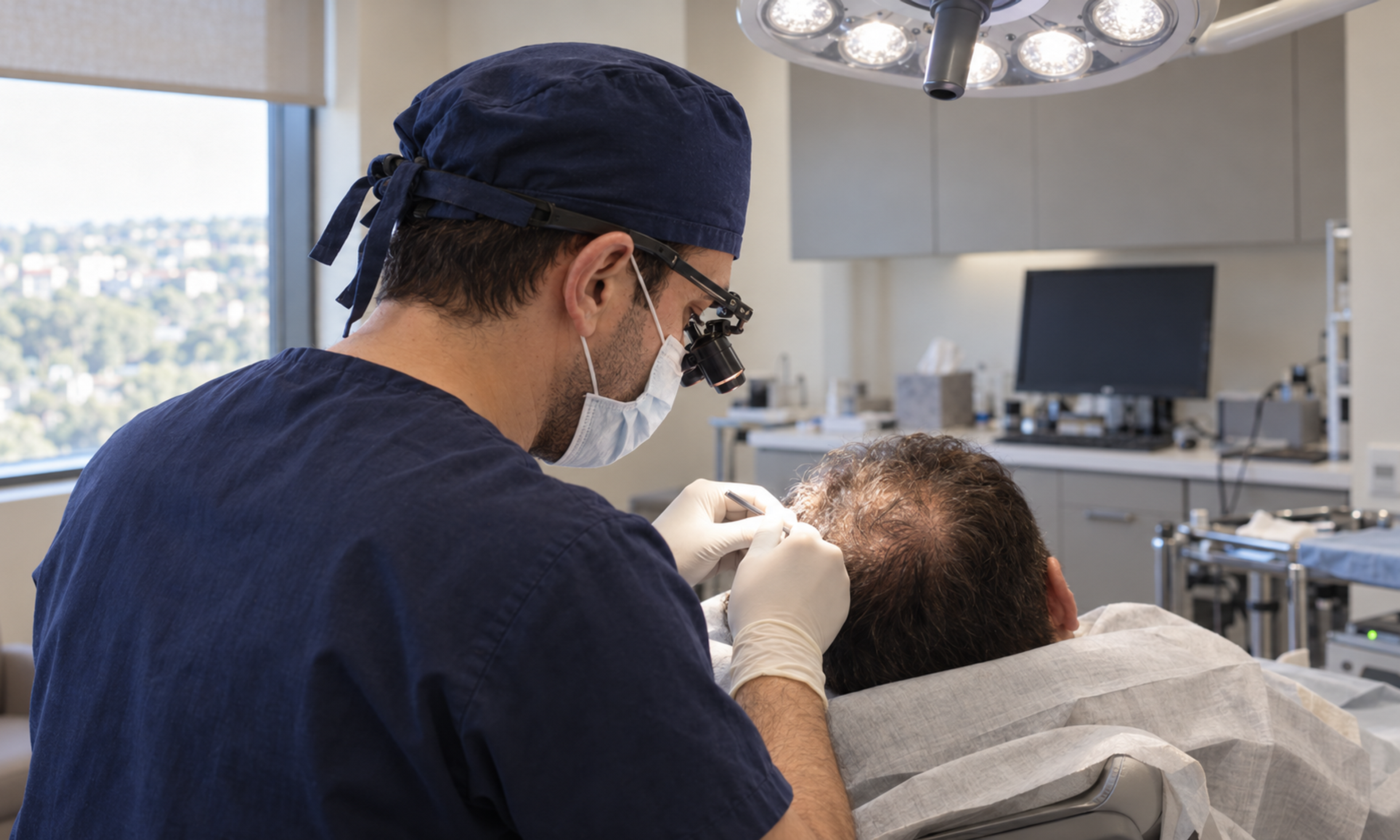
Growth is slow and uneven. This is the ordinary course, not the fastest one.
- Session 1
Applied to the scalp after magnified assessment of which follicles are still viable.
- Week 4
Second session. Nothing is visible yet; this is a course, not an event.
- Month 3
Shedding typically slows first. Calibre, where it changes, changes after that.
- Month 6
Reassessed under magnification against the baseline images, and stopped if it is not earning its place.
See it in his own words.
A short film from the clinic’s own channel — the procedure explained plainly, by the surgeon who performs it.
Questions
Does exosome therapy work?
It is the newest of the non-surgical options and the least settled. The laboratory work on follicle signalling is genuinely interesting; the human clinical literature is small, short and mostly uncontrolled. We will tell you that rather than quote you a percentage.
Can it replace a hair transplant?
No. It does not create follicles where none remain. Where an area has been bare for years there is nothing left to signal to. Any clinic presenting it as an alternative to surgery is ahead of the evidence.
What does a course involve?
Usually three sessions several weeks apart. The preparation is applied after microneedling or injected directly under topical anaesthetic, takes around thirty minutes, and has no downtime.
Is it worth travelling for?
Not on its own. If you are already coming to Istanbul for surgery it can be given in the same visit, with follow-up arranged at home. Building a separate trip around a course is something we would talk you out of.
Who is it actually for?
People holding ground — early loss where follicles are alive but shortening, the native hair around a transplant, and those who cannot tolerate the standard medical treatments and whose alternative is nothing at all.
How does it compare with PRP?
PRP has the larger evidence base and costs less. Exosome therapy is newer and less settled. Both are supportive rather than restorative, and for most people the sensible sequence is a medical plan first, surgery where the loss justifies it, and signalling treatments as support.
Sources
- 01Exosome therapy in dermatology: current evidence — Journal of Cosmetic Dermatology, 2023