

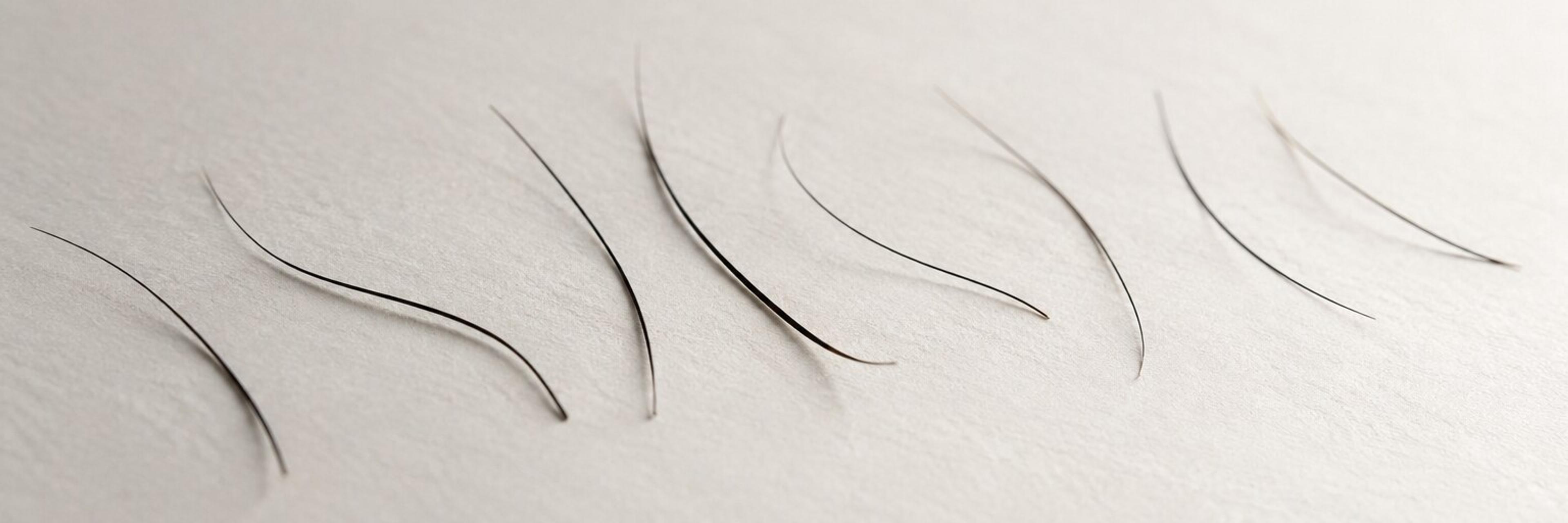
The hardest part of a hair transplant for most patients is not the day of surgery. It is months two to five, when the transplanted hairs have fallen out and nothing has yet replaced them.
Weeks one to three
Swelling settles within days. Crusting around the grafts clears in the first week to ten days. The transplanted hairs are visible but are not yet growing — they are attached to follicles that are re-establishing a blood supply.
If you have travelled for the procedure, this is the stretch that takes place at home. Grafts are secure once scabbing has formed its natural adhesive at around seventy-two hours, which is why a short flight can usually be cleared from day three. The first wash is the thing most patients get wrong unsupervised: it is deliberate, unhurried, and not a scrub.
Months one to four
The transplanted hairs shed. Nearly all of them. This is expected: the follicle survives and enters a resting phase before producing a new shaft. Patients who have not been warned about this stage often believe the procedure has failed, and some seek a second opinion during exactly the weeks when nothing can be assessed.
A smaller number experience shock loss in the native hair around the grafts — thinning hair that was already weakening, pushed into shedding by the trauma of surgery. It generally recovers. It is also the reason a plan sometimes includes PRP or exosome therapy to support what is already there.
Months four to eight
New growth begins, fine and often lighter than the surrounding hair. Density looks uneven because follicles do not wake together.
This is the stage at which comparison photographs start to be worth taking, as long as they are taken in the same light, at the same angle, with the hair at the same length. Most of the disappointment we see at month six is a lighting difference rather than a growth one.
Months eight to twelve
Calibre thickens and the unevenness resolves. The result settles into something that can reasonably be judged.
After the first year
The transplanted follicles are permanent. The hair around them is not, and that is the part a good plan accounts for. Loss continues on its own schedule, which is why the first operation is designed with the second one in mind and why medical treatment of the native hair is usually part of the conversation rather than an upsell after it.
What to measure against
This timeline, rather than the mirror. The mirror is checked daily, at close range, by someone who has every reason to be anxious about it. A photograph every eight weeks in consistent light will tell you the truth sooner and with less distress.

Considering a procedure?
Tell us your goals and we will map out your options.